



2026 marks a significant milestone for the collaboration between ASA and Epoch International Biomedical Technology LTD, the leading distributor of the company's veterinary devices in Taiwan since 2016. This ten-year partnership is based on a shared vision that places animal welfare, the centrality of research as a factor of reliability, and the importance of safety at its core. Reflecting this shared vision, our local partner not only has its own sales network, but also has its official headquarters, a training academy, and a clinic called "Affinity Veterinary Center" in Taichung, Taiwan.
Among the most recent initiatives, it's worth mentioning the donation of an Mphi Vet Orange device to National Chiayi University
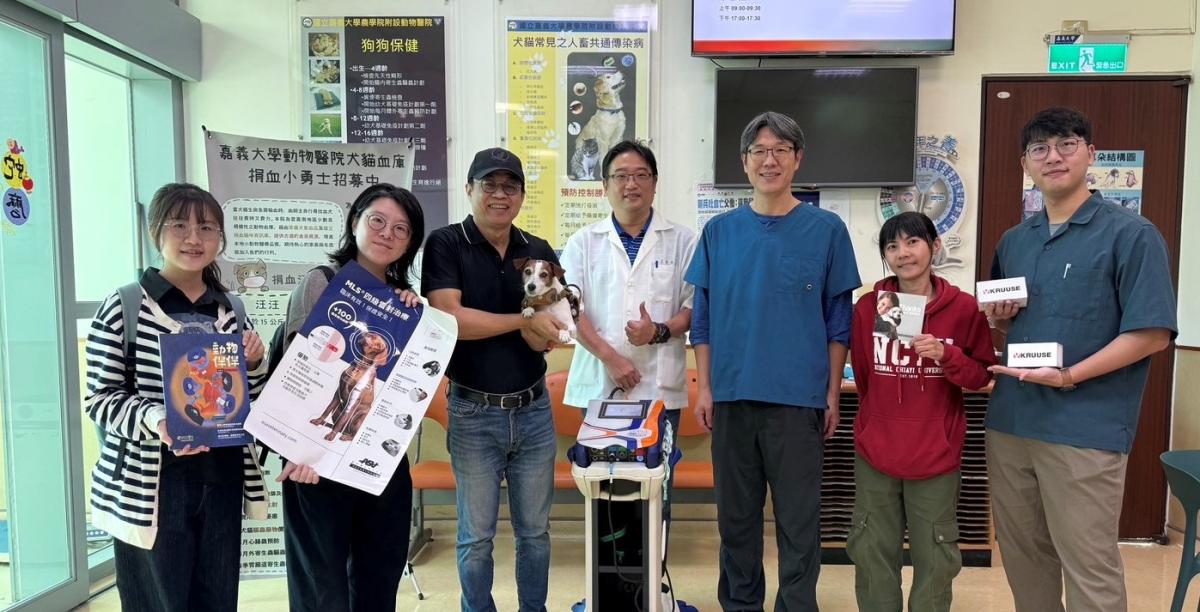
an idea that Professor Feng Pang, owner of Epoch, pursued with the clear goal of supporting veterinary education by providing and sponsoring advanced teaching equipment to universities. The choice of the university, located in southern Taiwan, was no coincidence: National Chiayi University is one of the country's leading universities, graduating a significant number of veterinarians each year.
Dr. Pang, why did you choose the Mphi Vet Orange device as the system to supply to National Chiayi University?
Mphi Vet Orange is extremely versatile and effective for use in a university setting. It's an excellent device for meeting both teaching and clinical training requirements.
Clinical training has been its main area of application at the university…
Exactly. In addition to "classic" training, Mphi Vet Orange is widely used in clinical demonstrations for students.
What benefits can students derive from the physical presence of the device in the classroom or clinic?
Having it available gives students the opportunity to gain extensive hands-on experience using a Class IV laser therapy instrument, thus broadening their understanding of rehabilitation medicine and of the potential anti-inflammatory and analgesic treatments. But that's not all. They also have the opportunity to experience how laser therapy is applied in practice and to understand the design behind each individual protocol. This comprehensive approach is undoubtedly useful for acquiring skills that will enhance their future professionalism.
Based on your direct experience, why do you think laser therapy devices should also be used in universities?
In Taiwan, Class IV laser therapy in rehabilitation has been established in veterinary clinical practice for about ten years. Its introduction into the student context not only helps cultivate early clinical familiarity but also contributes to greater awareness and long-term recognition of laser therapy and its associated brands.
Specifically, based on your experience, what makes MLS® Laser Therapy effective in treating the most common conditions in small animals, exotic animals, and horses?
In addition to pharmacological treatment, integrating localised physical therapy and laser irradiation in the affected area can significantly enhance the anti-inflammatory and analgesic effects, greatly accelerating the overall recovery process.
What are the main strengths that make it particularly effective?
Its advantages are many… I think, for example, of its features such as:
- its non-thermal treatment
- precise localised application
- a highly intuitive preset menu based on the pathology
- accurate, effective, and reproducible dosing.
Do these factors also contribute to improving and simplifying the veterinarian's work?
Undoubtedly. By not requiring continuous manual scanning during treatment, laser therapy reduces operational complexity and physical fatigue for the veterinarian.
MLS® Laser Therapy also provides a further positive aspect, offering a gentle, non-invasive treatment option that integrates well with surgery and pharmacological therapy.