




Osteoarthritis (OA) is one of the most common chronic conditions in canine patients, significantly impacting mobility, quality of life, and long-term clinical management. Although nonsteroidal anti-inflammatory drugs (NSAIDs) are the standard of care for pain management, there is growing interest in non-pharmacological approaches that can complement or, in selected cases, reduce drug dependence.
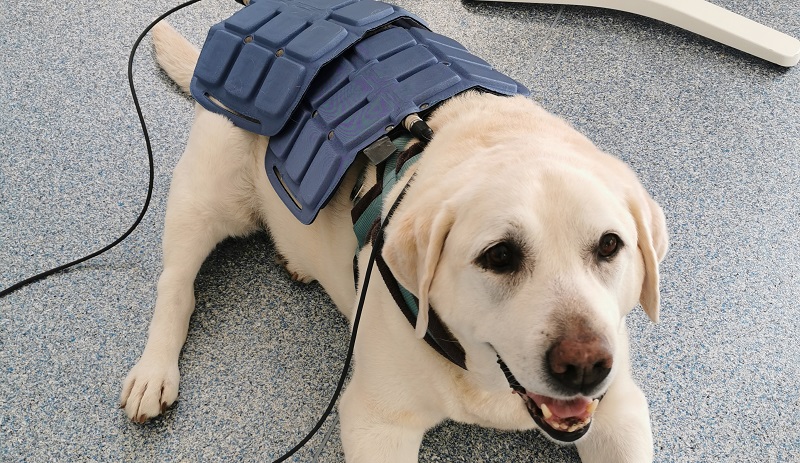
A recent randomised pilot study, published in Veterinární Medicína (Online First), provides new data on the clinical effects of pulsed electromagnetic field (PEMF) therapy, delivered via a PMT Qs device (ASA), compared to a standard NSAID (mavacoxib) protocol.
PEMF and Magnetotherapy: a necessary clarification
In the context of veterinary rehabilitation medicine, the term “magnetotherapy” is often used generically to describe various magnetic field-based technologies. However, it is important to distinguish between heterogeneous approaches and PEMF (Pulsed Electromagnetic Field Therapy), which represents a specific and technologically advanced modality.
Unlike traditional magnetotherapy, which often has poorly defined parameters, PEMF uses pulsed electromagnetic fields with controlled frequency, intensity, and waveforms, allowing standardised and reproducible therapeutic protocols.
This distinction is also relevant from a clinical perspective, as the results reported in the literature refer to certified PEMF devices and cannot automatically be extended to other forms of generic magnetic therapy.
The study
The study included dogs diagnosed with osteoarthritis, randomised into two treatment groups:
- PEMF Group (with PMT Qs Vet device, ASA)
- NSAID Group (mavacoxib)
Clinical outcomes were assessed using objective and functional parameters, including:
- Pain levels
- Lameness
- Muscle circumference
- Joint range of motion (ROM)
Main clinical findings
Pain reduction
The dogs treated with PMT Qs Vet showed a statistically significant reduction in pain (~30%) (P = 0.0006).
From a clinical perspective, this magnitude of reduction is significant as it translates into greater patient comfort and improved adherence to rehabilitation protocols.
Improvement in lameness
A significant improvement in lameness was noted in the PEMF group (P = 0.0003), indicative of recovery of locomotor function
This suggests that PEMF does not only modulate pain symptoms but also contributes to restoring the function.
Muscle trophism
One of the most significant results was the increase in muscle circumference (+14.9%, P = 0.006), associated with a large effect size.
This highlights a distinctive feature: in addition to pain control, PEMF therapy appears to support muscle trophism, most likely through improved limb use and functional recovery.
Joint mobility
The study showed a progressive recovery of joint range of motion (ROM) (P = 0.002).
The improvement in ROM is clinically significant for managing OA, as it directly influences mobility, daily activity, and long-term joint health.
Safety profile
No adverse events were reported in the PEMF group, confirming a favourable safety profile for this therapeutic modality.
Comparison with NSAID treatment
The NSAID-treated group did not show statistically significant improvements in most of the parameters evaluated.
This does not diminish the role of NSAIDs for managing OA but suggests that pharmacological treatment alone may not be sufficient to manage the multifactorial nature of the disease, especially in terms of functional recovery.
Overall, the results indicate that PEMF magnetotherapy with PMT Qs Vet can:
- Reduce pain
- Improve gait and mobility
- Support muscle recovery
- Improve joint function
These elements position PEMF as a complementary therapeutic option within a multimodal approach to canine osteoarthritis.
For clinicians managing canine osteoarthritis, PEMF therapy represents a promising tool to integrate into treatment protocols, particularly when the goal goes beyond pain control to include functional recovery and improved quality of life.
Pulsed electromagnetic fields vs NSAID therapy in canine osteoarthritis: A randomised comparative pilot study
S. Sassaroli, F. Dini, V. Sisti, V. Riccio, S. Meggiolaro, L. Bellodi, A. Palumbo Piccionello
Veterinární Medicína, 71(3):106-116, 2026